
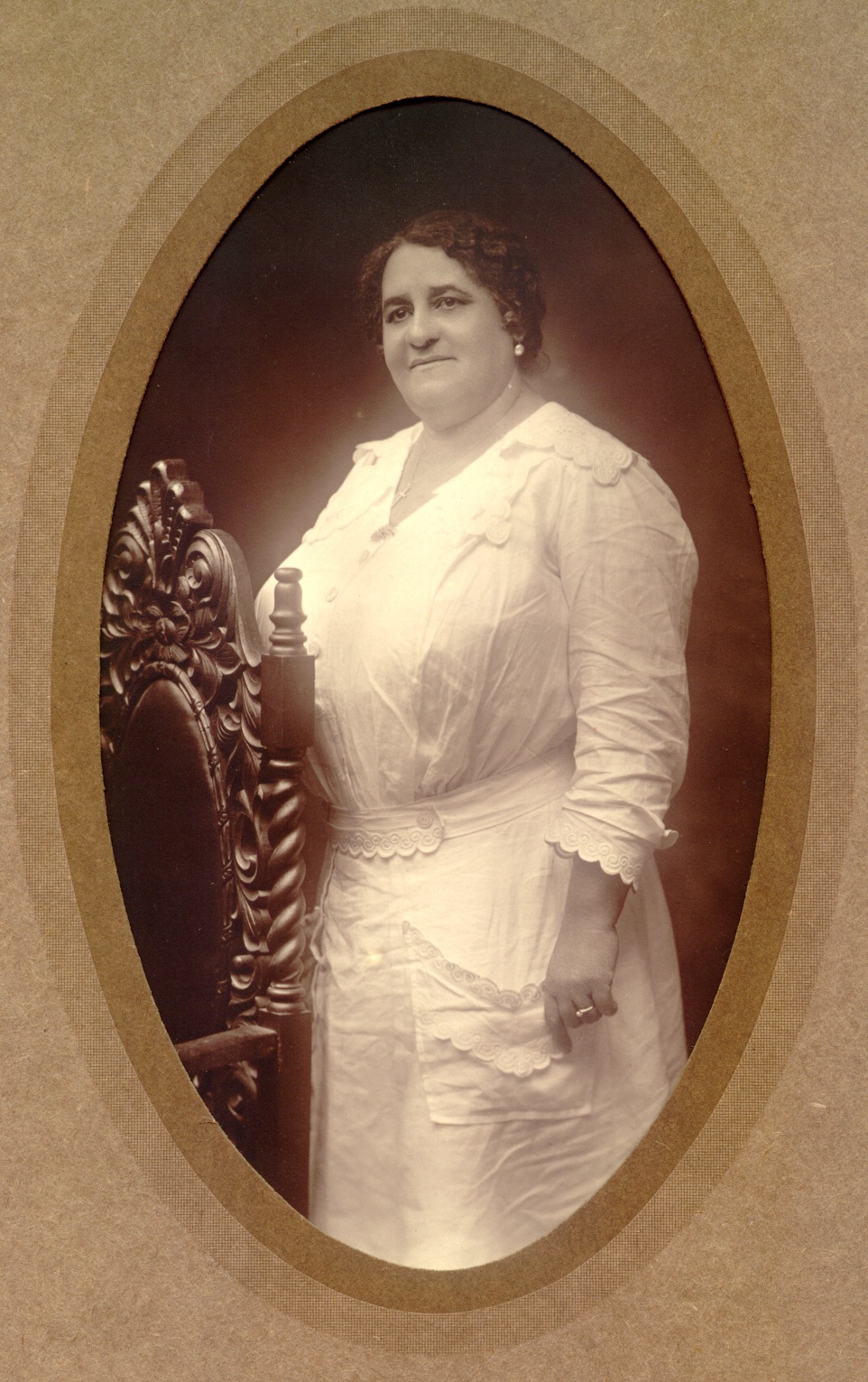
Maggie L. Walker had a profound impact on the lives of people in the New River Valley and beyond, including in places like Blacksburg, by shaping ideas, institutions, and opportunities that extended far beyond her home city of Richmond. Her work connects local African American history to broader state and national movements for economic independence, civic engagement, and community self-determination.
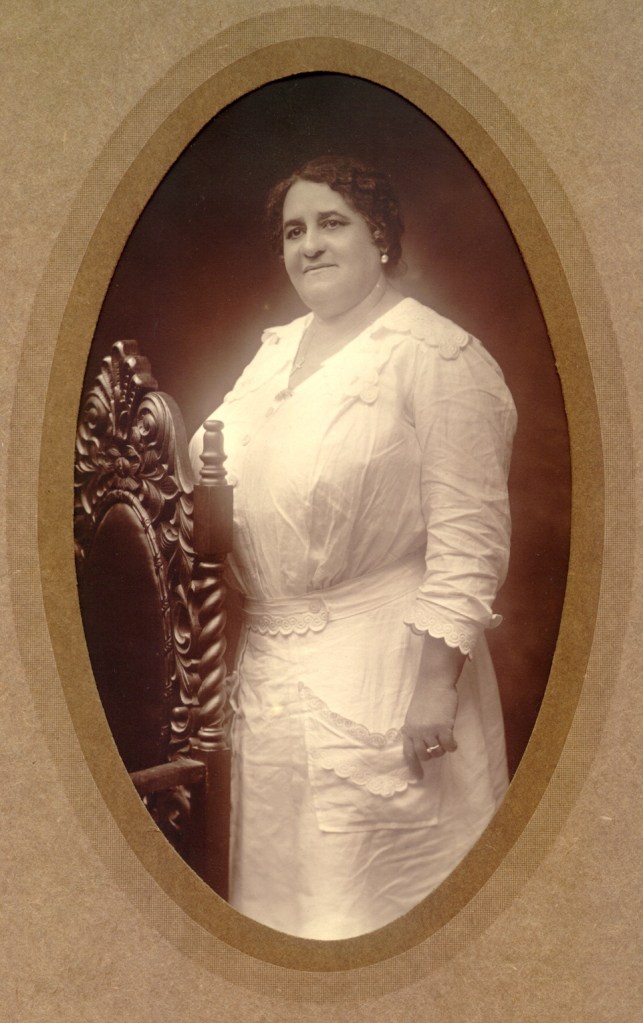
A Model of Black Economic Self-Help and Community Building
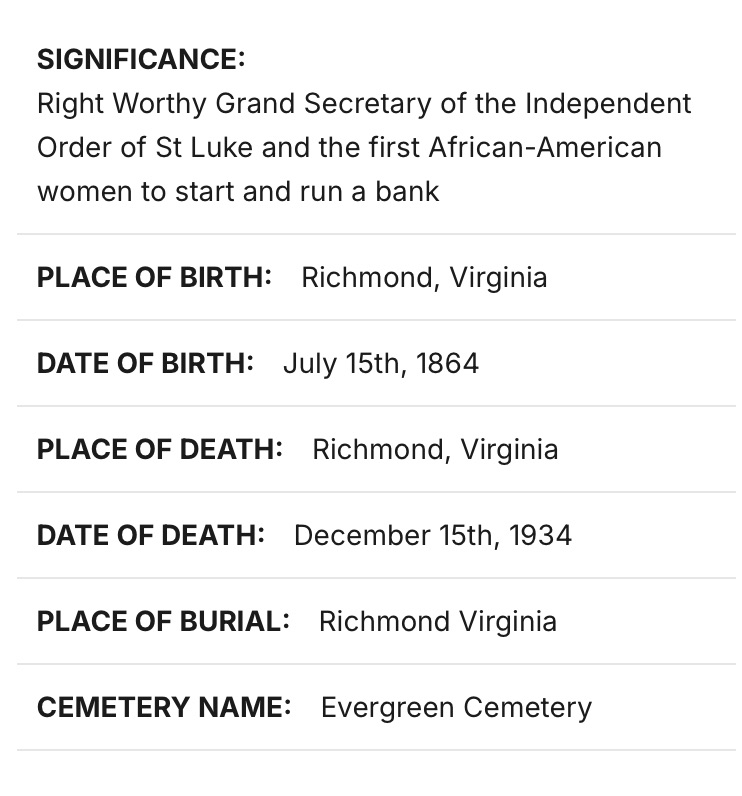
Maggie L. Walker’s leadership of the Independent Order of St. Luke (IOSL) exemplified cooperative economics, mutual aid, and self-reliance at a time when African Americans were largely excluded from mainstream financial systems. Under her leadership, the Order expanded nationally and became financially strong, serving as a model for Black civic and economic organizations across the country.
These principles—supporting communities, building institutions, and circulating wealth within the community—resonated across Virginia, including in the New River Valley, as African American communities worked to establish schools, churches, businesses, and fraternal societies that met their own needs.
First African American Woman to Charter and Lead a Bank
In 1903, Maggie Walker founded the St. Luke Penny Savings Bank, becoming the first African American woman in the United States to charter and serve as president of a bank. This was more than a symbolic achievement. The bank made loans to Black homeowners and small business owners, encouraged savings among children, and provided financial services routinely denied by white-owned banks.
Her emphasis on children’s savings and financial literacy was an early and intentional effort to promote economic empowerment across generations. Although the bank itself was based in Richmond, the ideals of financial independence and community banking spread throughout Virginia, including the New River Valley.
Institutional Leadership and Civic Engagement
Walker’s influence extended beyond finance into broader civic life. She helped found and lead organizations such as the NAACP and the National Association of Colored Women (NACW), demonstrating how economic leadership and civil rights activism could work hand in hand.
While only one surviving historical record documents Maggie Walker’s physical presence in the New River Valley—her initiation of St. Frances Council No. 235 of the Independent Order of St. Luke in Blacksburg in August 1902—the ideas, networks, and institutional frameworks she advanced were part of a larger Black civic culture that shaped African American life across Virginia. Community leaders in places like Blacksburg drew upon the traditions of mutual aid, fraternal organization, and self-help that she championed.
Legacy of Representation and Inspiration
By transforming a nearly bankrupt fraternal order into a national movement, leading successful enterprises, and breaking barriers as a Black woman in business and civic life, Maggie L. Walker expanded what was possible for African Americans at a time of severe social and legal restrictions. Her legacy offered both practical tools and powerful inspiration to communities, including those in the New River Valley.
In Summary
Maggie L. Walker’s impact reached far beyond Richmond. Through her leadership in the Independent Order of St. Luke, the founding of the St. Luke Penny Savings Bank, and her broader civic work, she provided enduring frameworks for economic self-determination and community strength—frameworks that shaped African American life across Virginia, including in the New River Valley.
References

- Banking Pioneer: Maggie L. Walker.
- Biography of Maggie L. Walker, Maggie L Walker National Historic Site
- Branch, Muriel Miller, Pennies to Dollars: The Story of Maggie Lena Walker, New York: Linnet Books, 1997.
- Branch, Muriel. Maggie Lena Walker (1864–1934). (2020, December 07). In Encyclopedia Virginia.https://encyclopediavirginia.org/entries/walker-maggie-lena-1864-1934.https://encyclopediavirginia.org/entries/walker-maggie-lena-1864-1934. Helpful timeline included.
- Brown, Elsa Barkley. “Womanist Consciousness: Maggie Lena Walker and the Independent Order of Saint Luke.” Journal of Women in Culture and Society, Spring 1989, vol. 14, no. 3, pp. 610-633.
- Carry On: the Life and Legacy of Maggie L. Walker (Video) Maggie Walker National Preservation Site, March 14, 2017.
- Chiles, Marvin. “‘Down Where the South Begins’: Black Richmond Activism before the Modern Civil Rights Movement, 1899-1930.” Journal of African American History, Winter 2020, vol. 105, no. 1, pp. 56-82.
- Even Though the Room Is Full, They Are “The Only One in the Room”, Eight Women Achievers Across Three Centuries Featured in Smithsonian Exhibit, November 13, 2020
- Garrett-Scott, Shennette. Banking on Freedom: Black Women in U.S. Finance Before the New Deal. New York, N.Y.: Columbia University Press, 2019.
- Harris, A. Lincoln. (1936). The Negro as capitalist. Philadelphia: The American Academy of Political and Social Science. (Page 47)
- Hines, G. Washington. (1924). Negro banking institutions in the United States. Washington, D.C.. (page 33)
- Honoring African Americans: Historic Women Trailblazers and Advocacy Organizations, March 11, 2021, Natalie Burclaff.
- House To Highway: Reclaiming A Community History, August 18, 2025.
- The inspiration & legacy of Maggie Lena Walker, By Ben Anderson, Maggie L. Walker National Historic Site, June 15, 2024.
- Marlowe, Woodruff Gertude, A Right Worthy Grand Mission: Maggie Lena Walker and the Quest for Black, Washington D.C, Howard University Press, 2003.
- “Maggie Lena Walker” National Park Service 19 April 2017.
- Maggie Lena Walker: Civil Rights Activist and Entrepreneur
A full 50 years before the Montgomery bus boycott, civil rights activist and entrepreneur Maggie Lena Walker led a city-wide boycott against segregated streetcars in Richmond, VA, and founded a newspaper, department store, and the St. Luke Penny Savings Bank, making her the first African American female bank president in the United States. Premiere Date: March 18th, 2020 - Maggie Lena Walker: How the daughter of a former slave became a banking pioneer, Econ Focus, John Mullin, 2022.
- Maggie L. Walker, First Black Woman to Charter a Bank, Library of Congress. Complete with book references.
- Maggie L. Walker, Maggie L Walker National Historic Site, Who was Maggie Lena Walker.
- Maggie L. Walker, Honorary Street Names in Richmond, Virginia.
- Maggie Lena Walker — First Female Bank Owner in the US.
- Maggie Lena Walker, Virginia Museum of History and Culture, Richmond, Va.
- Minerva Issue 4: Remembering Maggie L. Walker
- Norwood, Arlisha. “Maggie Walker.” National Women’s History Museum. 2017. www.womenshistory.org/education-resources/biographies/maggie-walker.
- Pennies and nickels add up to success: Maggie Lena Walker
By Crystal Marie Moten, February 27, 2020 - St Luke Herald Newspaper
- “To Take Our Place In The Business World”: Jackson Ward’s Segregated Economy. Dec 15, 2025.


Leave a comment